

Ongoing Project진행 중 프로젝트Progetto in corso
AfterThoughts
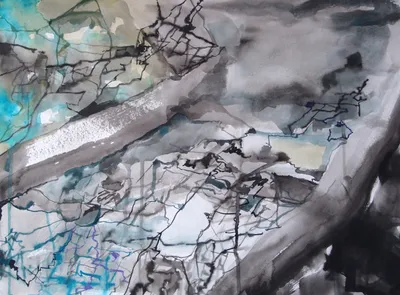
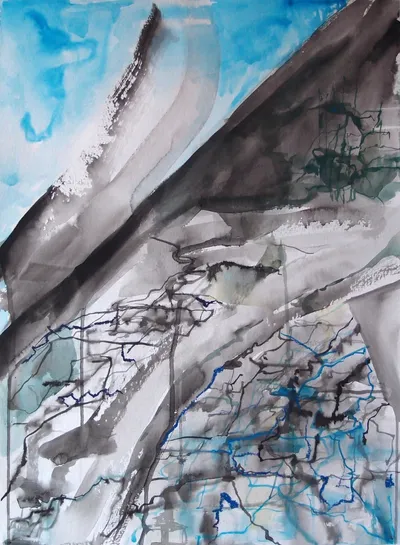
This is an ongoing project in which each chapter takes one philosophical text as its starting point and turns it into paintings, with sound, technology and movement. 'AfterThoughts' is about pinning down what matters and giving it visual form. (...)
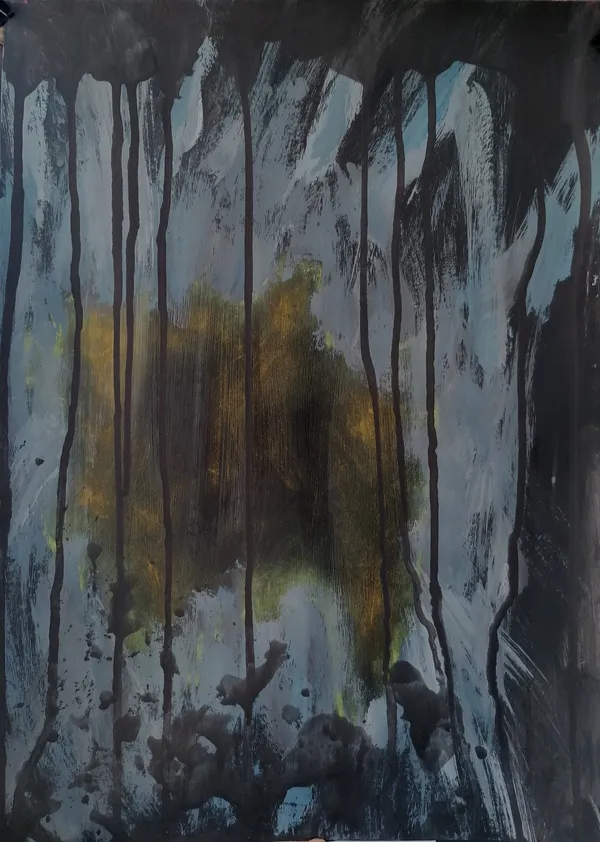
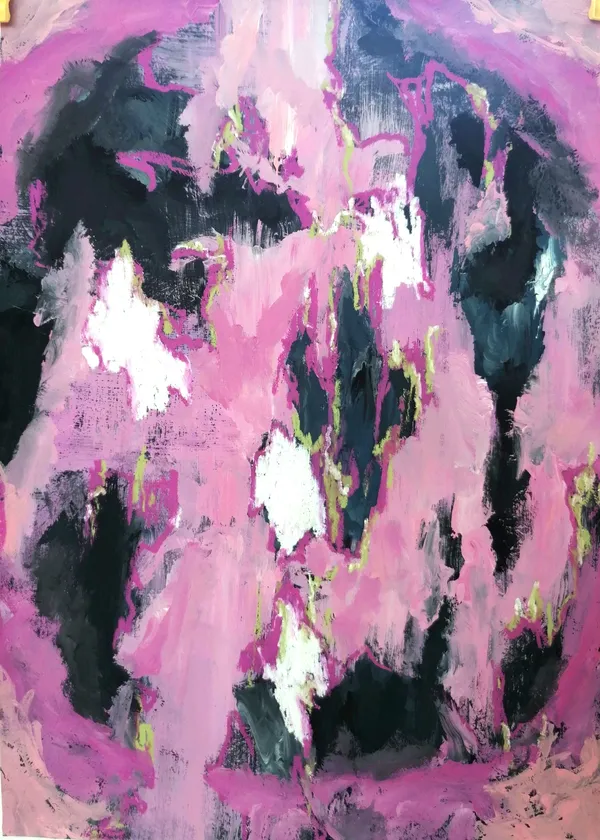
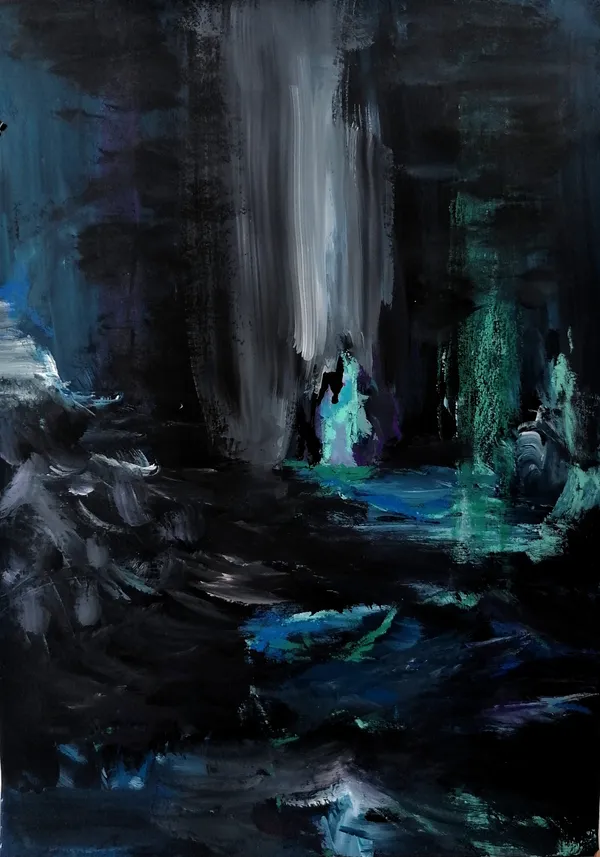
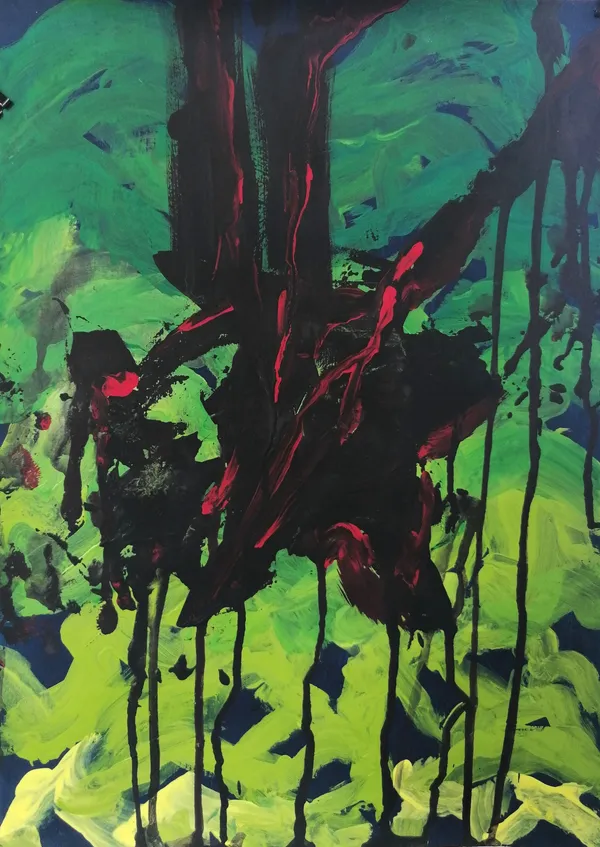
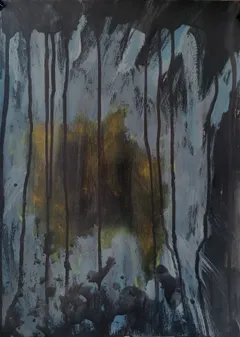
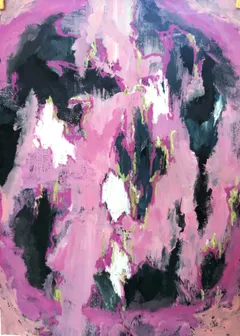
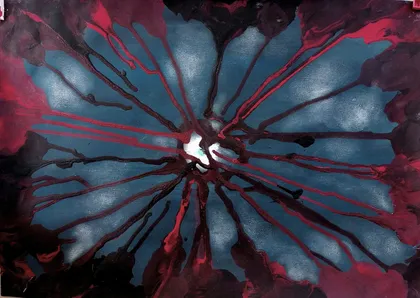
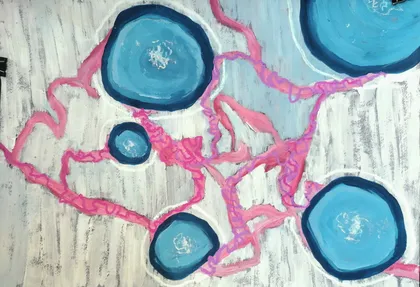
After Liberty
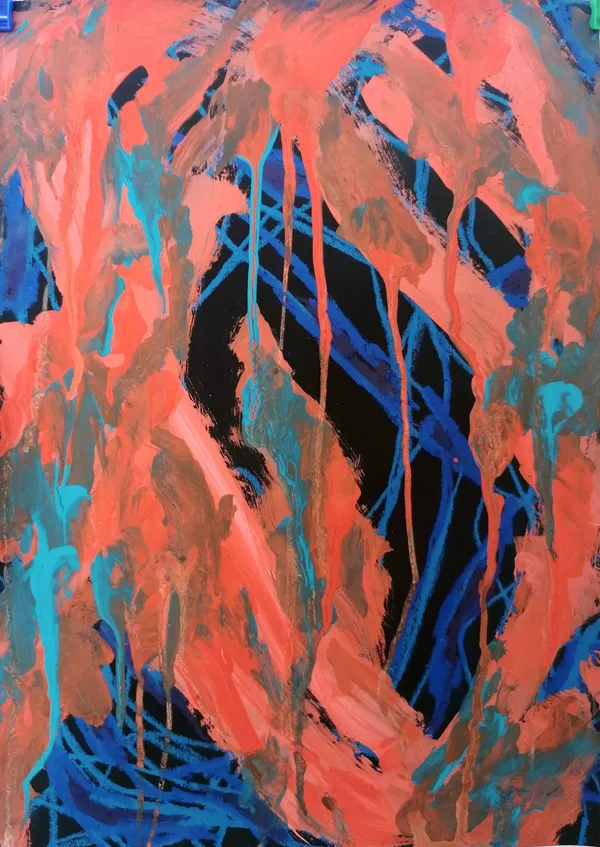
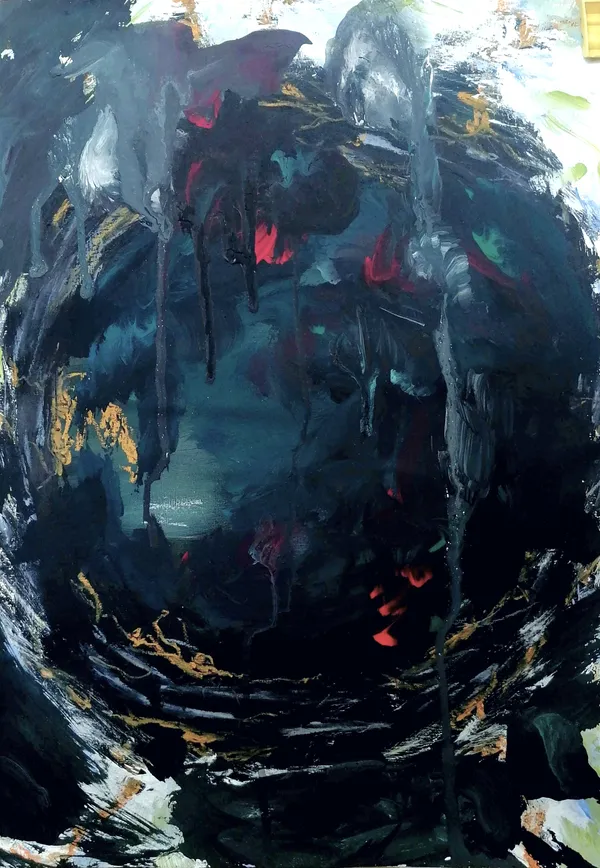
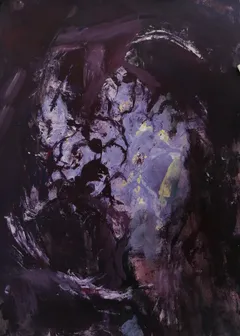
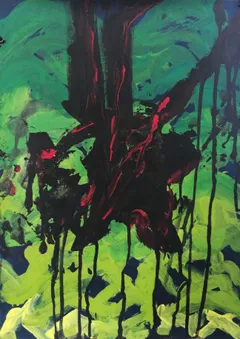
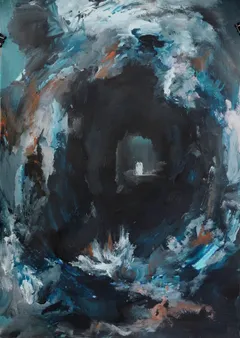
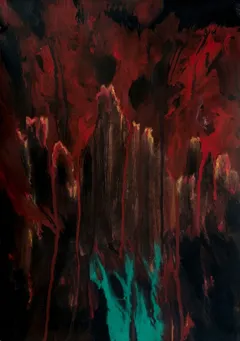
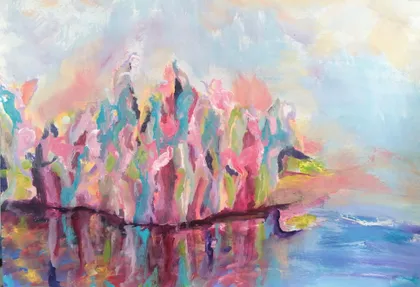
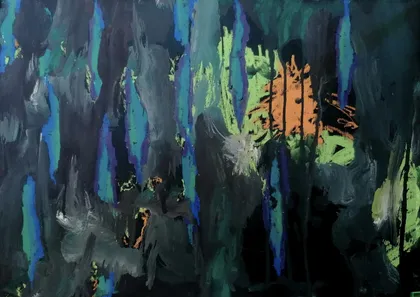
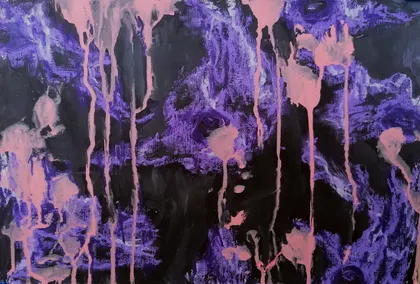
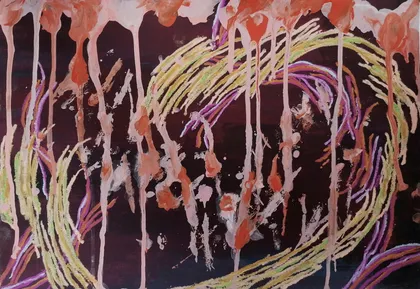
Last December, she read John Stuart Mill's 『On Liberty』, and it brought the vague questions in her head into sharper focus. Although it was published back in 1859, many parts of what he wrote about individuality, freedom, the need for diverse environments, individual development and the dangers of the tyranny of the majority caused a shift inside her. (...)
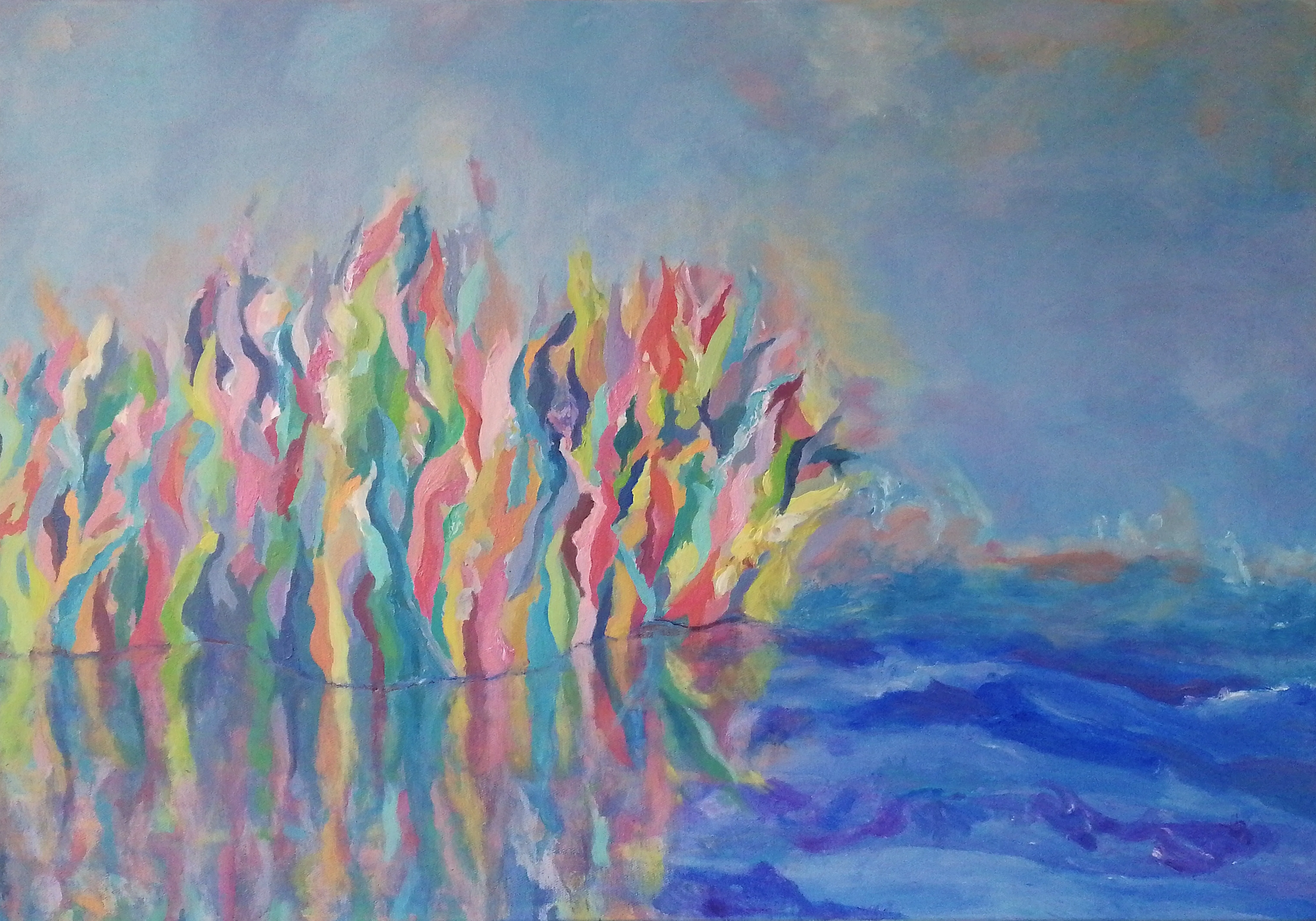
"The whole strength and value, then, of human judgment, depending on the one property, that it can be set right when it is wrong, reliance can be placed on it only when the means of setting it right are kept constantly at hand. In the case of any person whose judgment is really deserving of confidence, how has it become so? Because he has kept his mind open to criticism of his opinions and conduct. Because it has been his practice to listen to all that could be said against him; to profit by as much of it as was just, and expound to himself, and upon occasion to others, the fallacy of what was fallacious. (...)"
—『On Liberty』(1859) by John Stuart Mill
Catalogue
Download the catalog as a PDF.
It includes a complete list of selected works available for exhibition, an ongoing project, an artist statement, a CV, and contact information.
Portfolio
EchoesəvYourFace
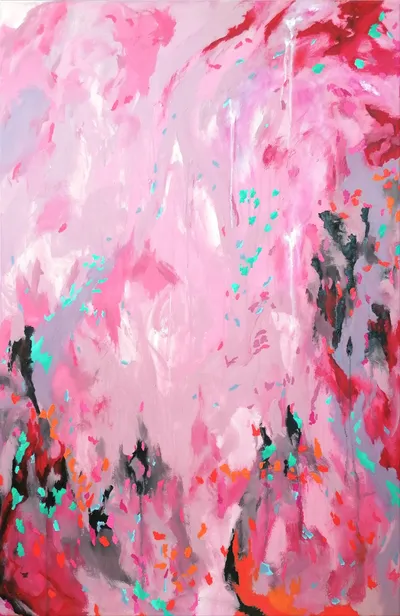
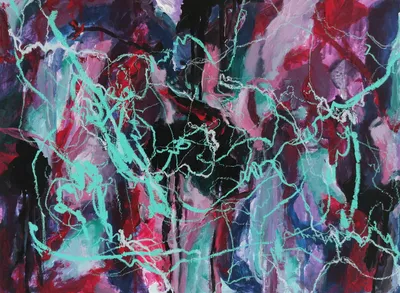
This participatory art installation comprises three abstract paintings and 143 interactive LED lights, which respond in real time to the emotions in audiences' facial expressions, detected by a camera using an AI face-recognition model. The detected data transforms the colour, movement, and intensity of the interactive LED lights illuminating the abstract paintings.
Rather than simply identifying a single primary emotion, the AI subtly incorporates secondary emotions, such as traces of surprise within a happy expression, enabling intriguing and nuanced combinations in the light sequences. When multiple viewers' faces are recognised simultaneously, each person's primary and secondary emotions mix, producing unpredictable and varied combinations.
The three main paintings displayed for the interactive installation (Fragments I, II, III) capture the swirling of feelings in an abstract style. It is about the sensation felt while wandering and searching for something, floating and suspended in space. Then, suddenly, every form of emotion overwhelms the viewer, surrounding them and drawing them somewhere among the fragments of memory. It is like a rush of feelings rising from within, like thousands of petals drifting without destination, tangled, spiralling, pulling each other close. It is as if every portion of memory comes rushing in, producing a chaotic longing before letting it drift away, forlornly. This installation is created in collaboration with Dr Luca Franceschi, a machine learning scientist.
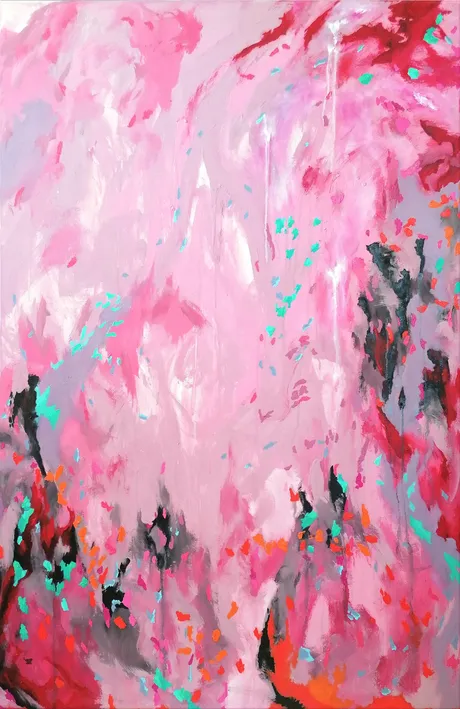
145 x 95 cm each (Unframed)
Oil & Acrylic on canvas
2025
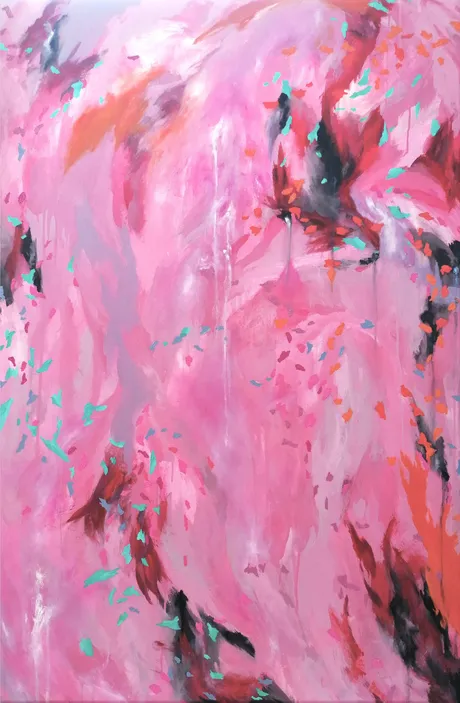
145 x 95 cm each (Unframed)
Oil & Acrylic on canvas
2025
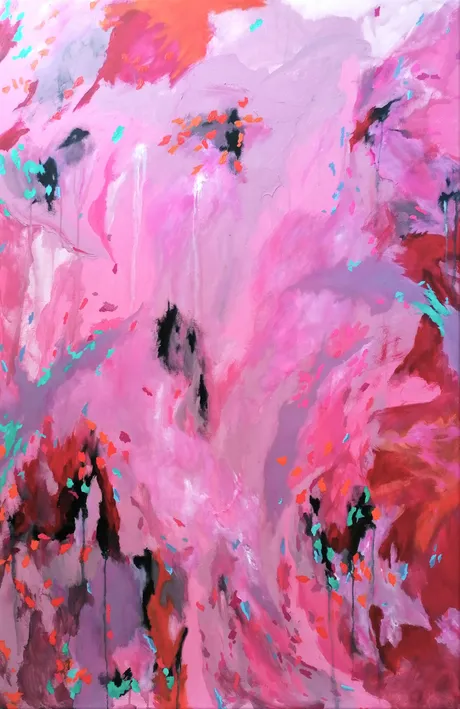
145 x 95 cm each (Unframed)
Oil & Acrylic on canvas
2025
EchoesəvYourFace
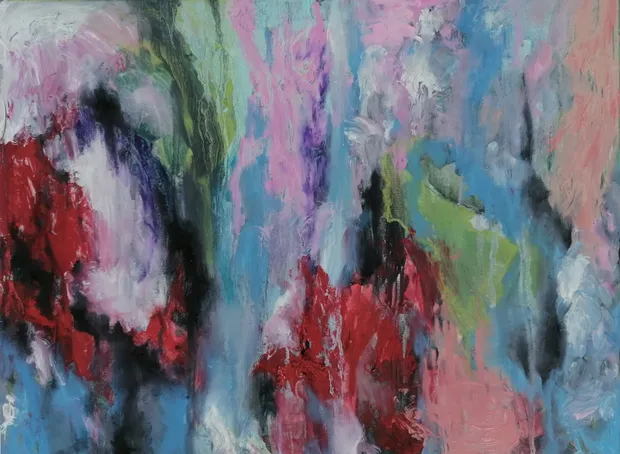
36 x 48 cm each (Unframed)
Oil & Acrylic on 330g/m² paper
2025
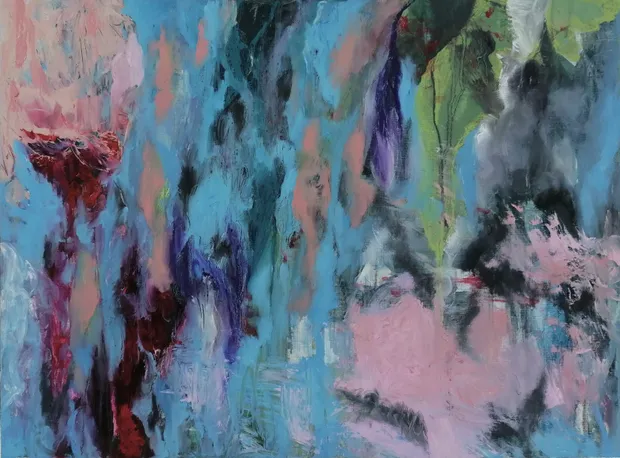
36 x 48 cm each (Unframed)
Oil & Acrylic on 330g/m² paper
2025
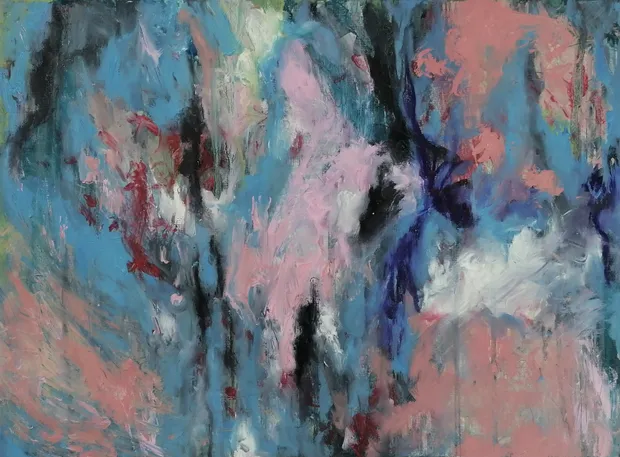
36 x 48 cm each (Unframed)
Oil & Acrylic on 330g/m² paper
2025
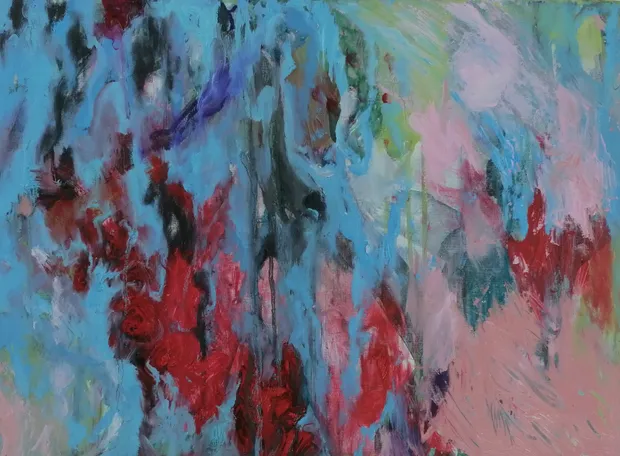
36 x 48 cm each (Unframed)
Oil & Acrylic on 330g/m² paper
2025
EchoesəvYourFace
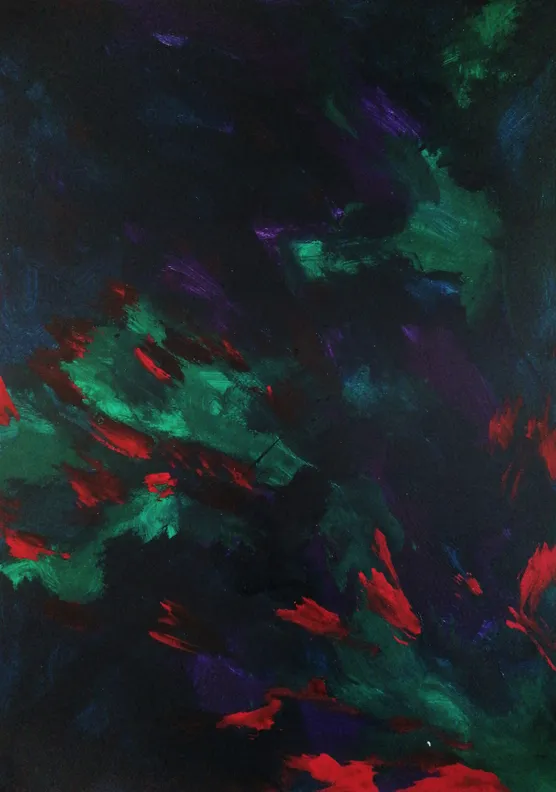
50 x 70 cm each (Unframed)
Acrylic on 400g/m² paper
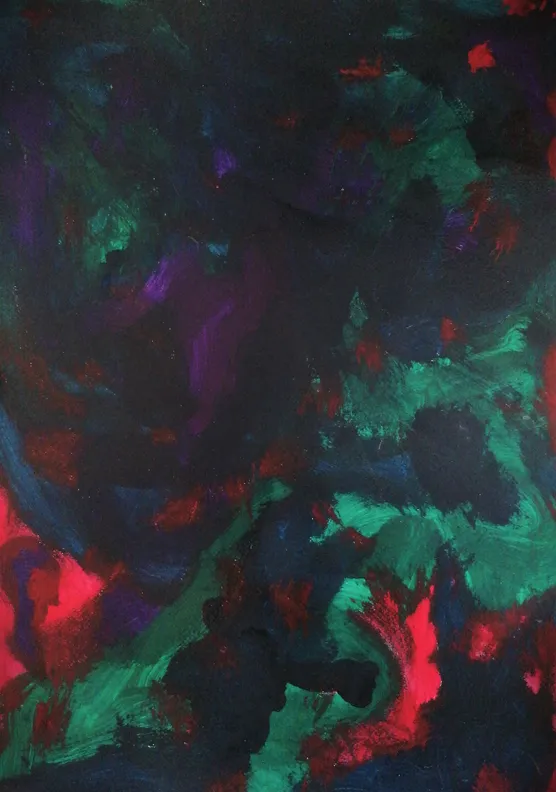
50 x 70 cm each (Unframed)
Acrylic on 400g/m² paper
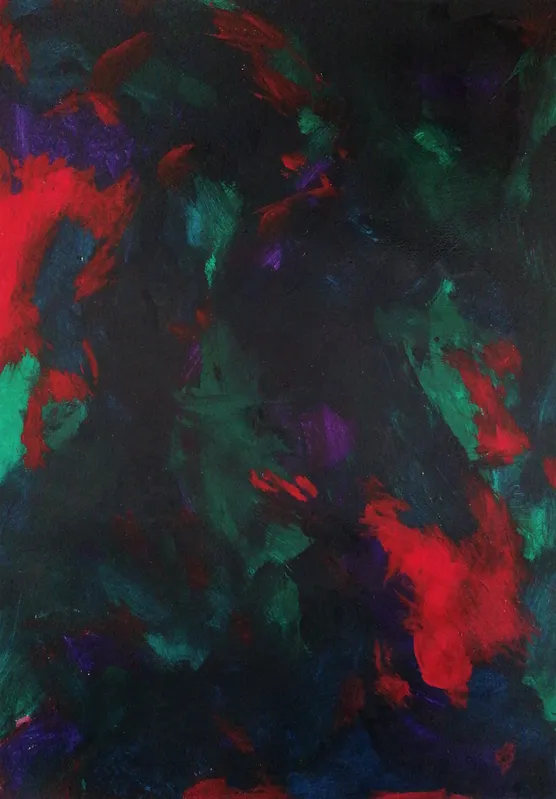
50 x 70 cm each (Unframed)
Acrylic on 400g/m² paper
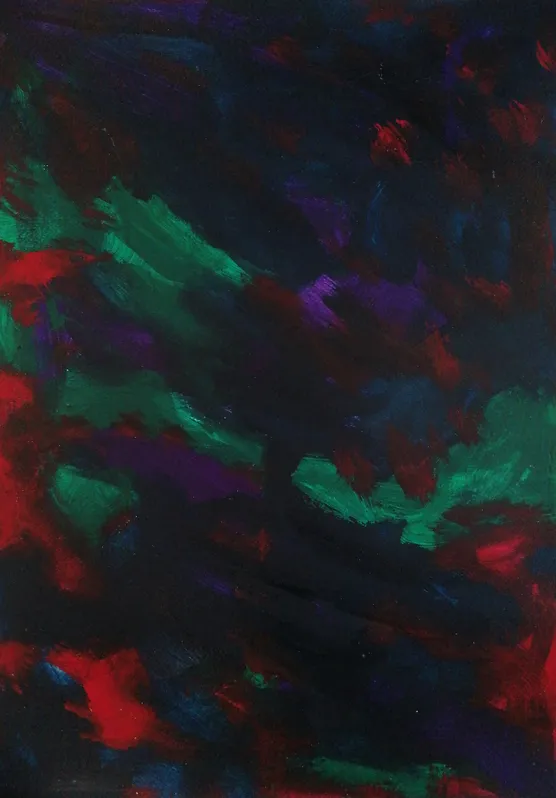
50 x 70 cm each (Unframed)
Acrylic on 400g/m² paper
Innerscape
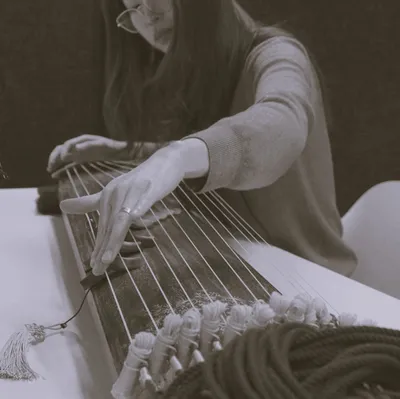
A series of imagined emotional landscapes, each accompanied by its own soundtrack, played on the gayageum, a traditional Korean 12-string instrument, composed and performed by the artist.
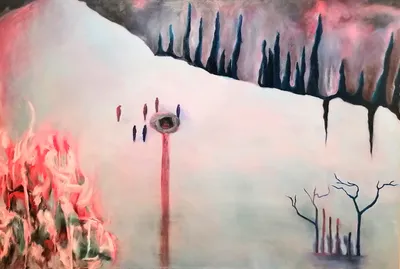
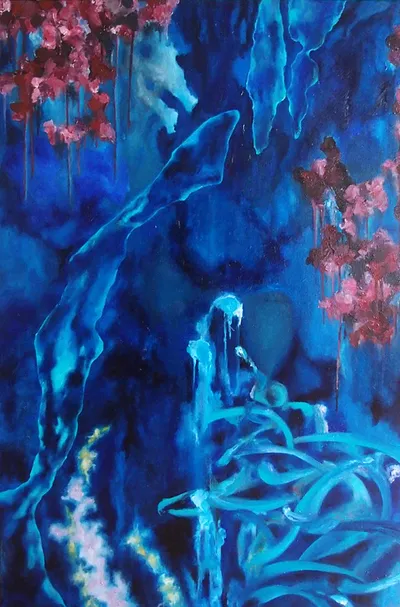
This series traces the confusing, unsettling experience she went through while becoming someone different over time. It grows out of life between different places and cultures, where belonging is always partial and the sense of home stretches, blurs, and sometimes slips away.
Each painting captures the feeling of standing on the boundary between two spaces, absorbing the overwhelming influence of a new environment while feeling a growing distance from the home country. Moments of confusion, constant adaptation, and the sensation of never fully belonging to either side are expressed in these inner landscapes. When the question of ‘what is the truest version of oneself?’ constantly circles, the certainty of identity blurs, the self feels unstable and strained to its limit, and the emotions and memories shaken by different expectations and meanings appear as 'Innerscape'.
The melodies of the gayageum strengthen the emotion of the artist finding herself where different cultures clash. These soundtracks contribute to a multi-sensory experience, fusing sound and colour into a more intended emotional state. This allows viewers to do more than look at the landscape; they feel its rhythm, tension, and subtle inner changes as if walking through her memory.
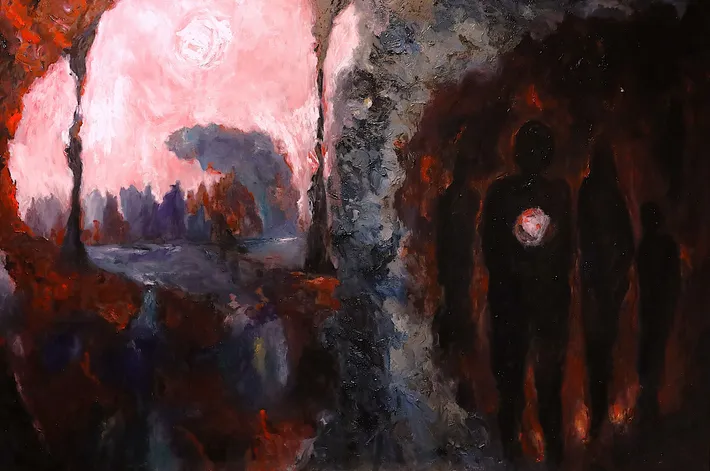
95 x 140 cm
Oil on canvas
2025
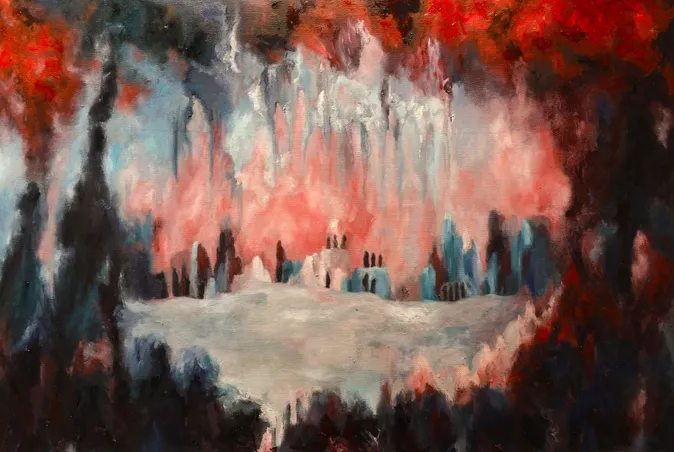
42 x 62 cm
Oil on canvas
2025
Innerscape
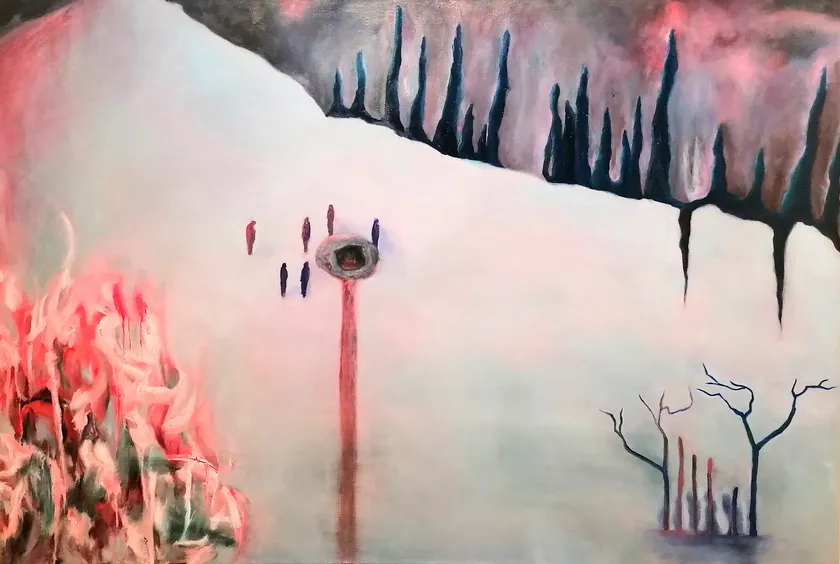
95 x 140 cm
Oil on canvas
2025
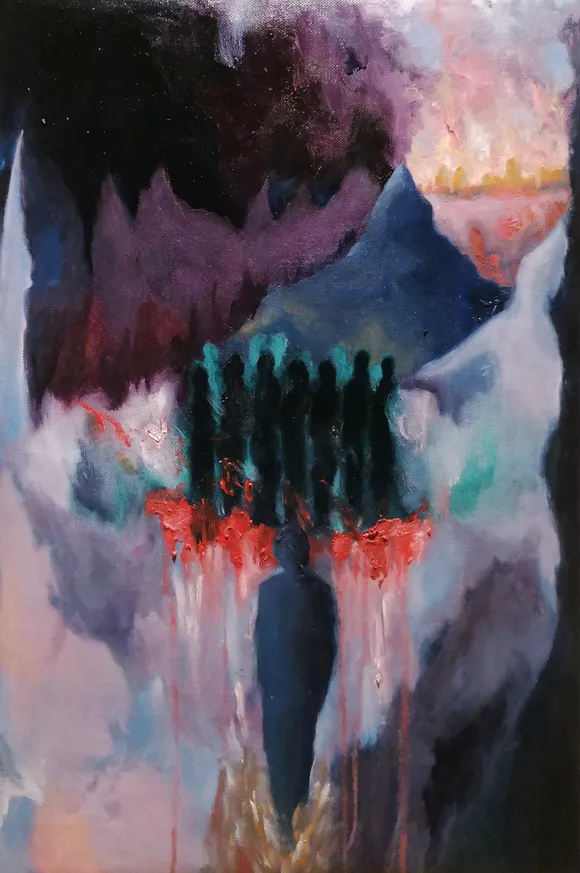
70 x 46 cm
Oil on canvas
2025
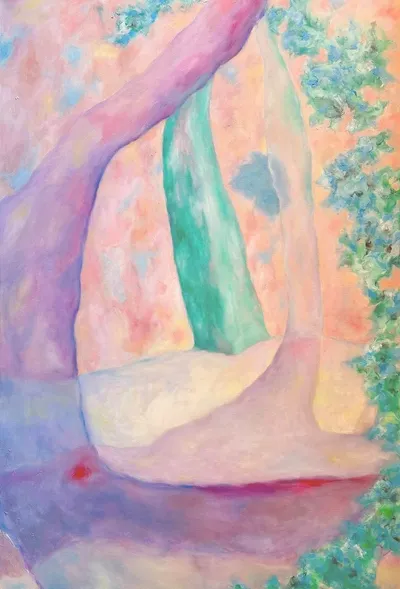
The Misty Heaven
This is the first series to capture the artist's working method, which involves an interplay between spontaneity and control.
One sketch showing objects floating within a misty, dreamlike space recalled the ascending saints found in the works of Old Masters, which became a motif for her works. Their dynamic compositions, fantastical moods, elegant styles, and balanced relationships among figures influence her art.
The artist has an instinctive desire to control, even while occasionally longing for a spontaneous approach to life. This duality is reflected in the creative process. Free, unconscious brushstrokes gradually coalesce into recognisable forms. Through the intentional shaping of these figures, the process goes through unexpected moments of creation. Objects floating within the composition, rendered in dark or intense hues with dynamic brushwork and fluid motion, evoke a sense of movement and vitality. In contrast, bright, serene colours and soft textures create a static, misty atmosphere that balances this dynamism.
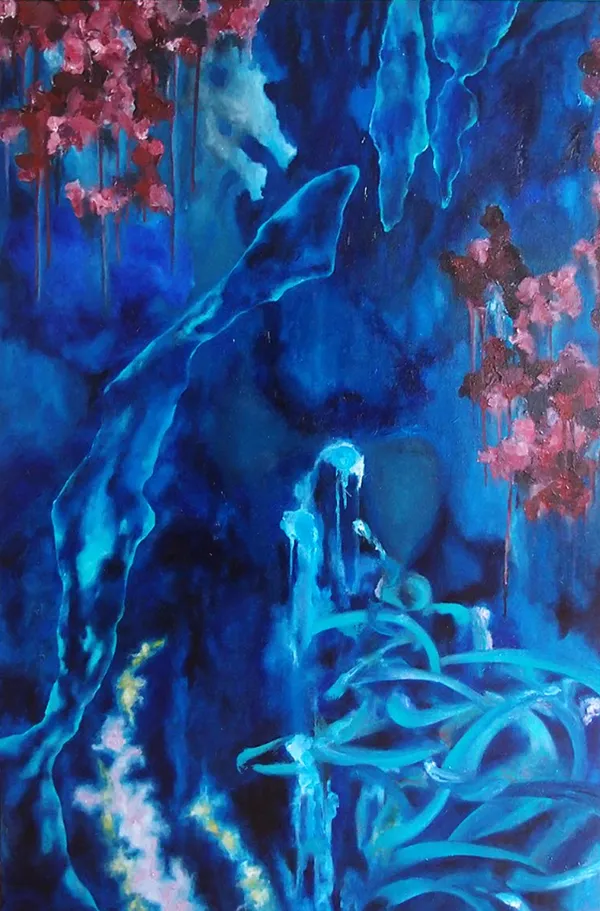
120 x 80 cm
Oil on canvas
2024
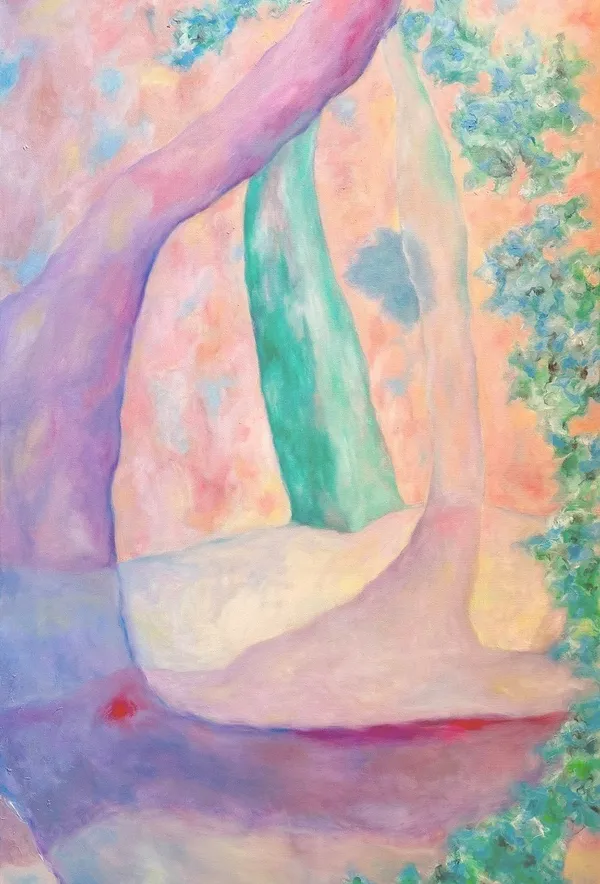
120 x 80 cm
Oil on canvas
2024
The Misty Heaven
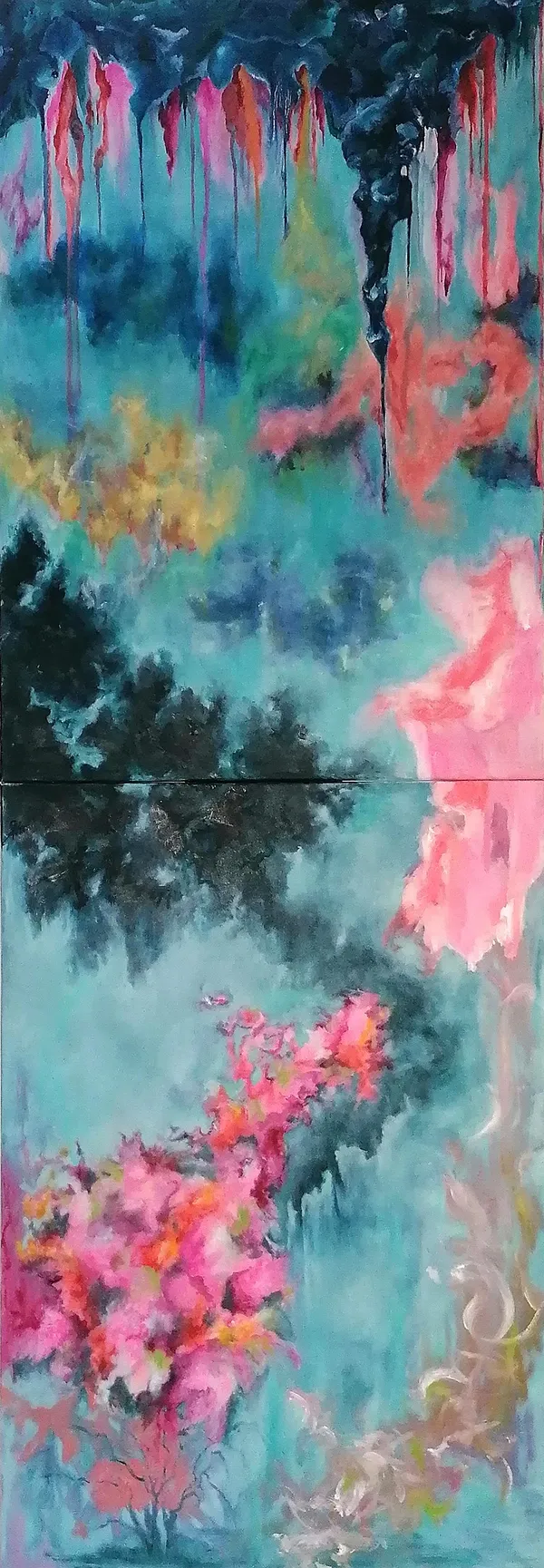
200 x 70 cm
Oil on canvas
2024
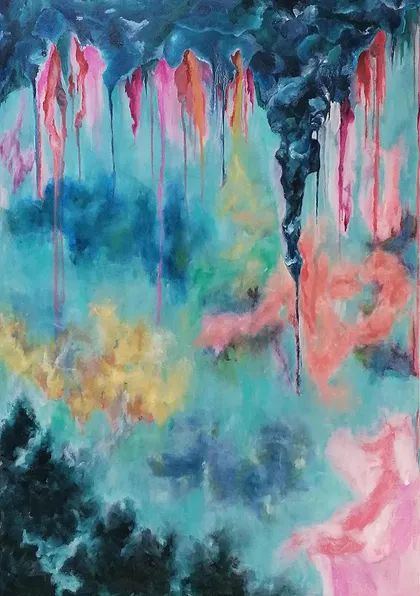
100 x 70 cm
Oil on canvas
2024
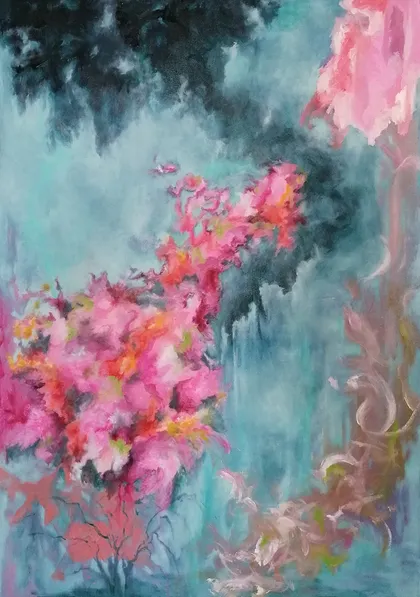
100 x 70 cm
Oil on canvas
2024
The Misty Heaven
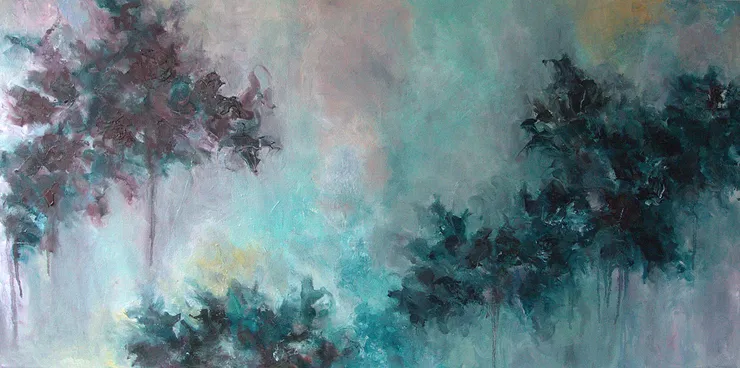
50 x 100 cm
Oil on canvas
2024
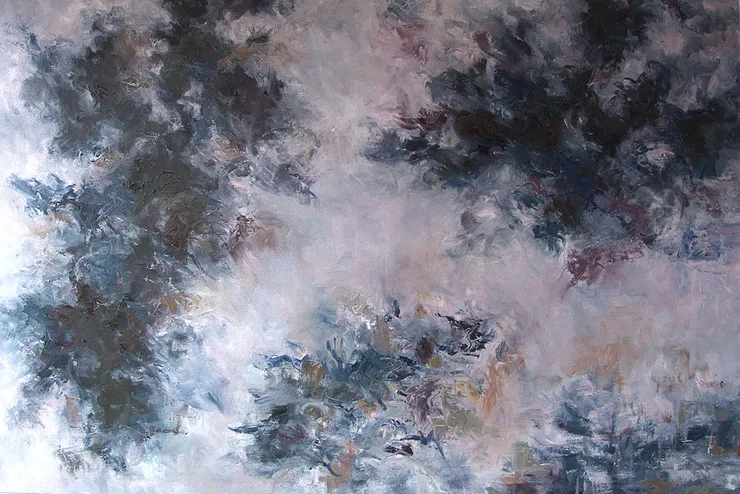
60 x 90 cm
Oil on canvas
2024
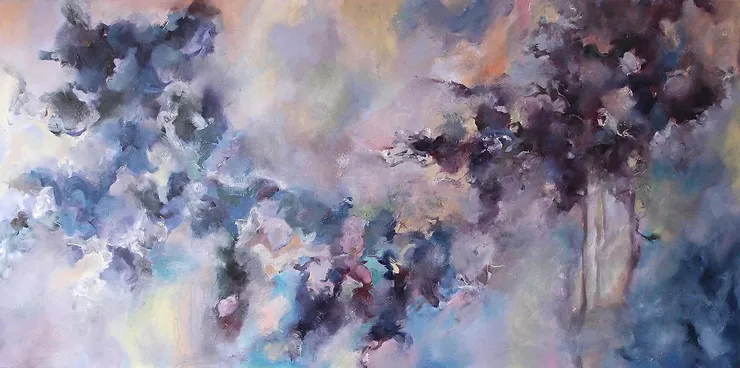
50 x 100 cm
Oil on canvas
2024
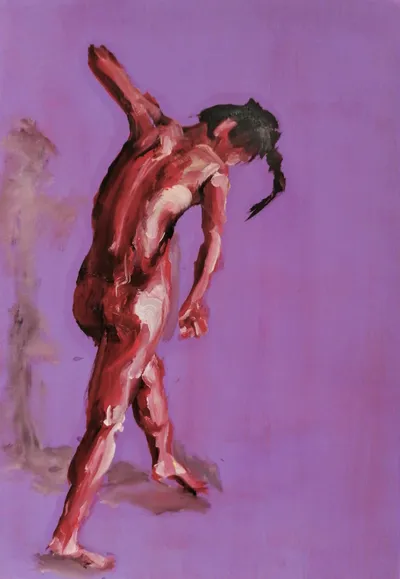
Dance (Hani-mation)
A portrait of the artist made through movement, holding her emotion as it came, before shaping. What started as improvised motion in her Berlin studio grew into a quiet refusal of fixed identity, of social structure, of the expectations gathered around her. The work is a declaration made on impulse, a rite in which she lets herself go completely by way of rhythm, memory, and feeling.
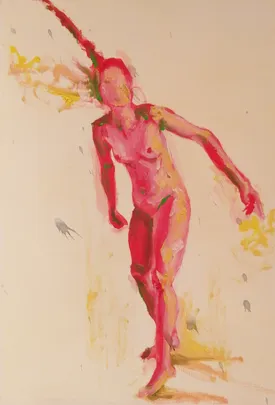
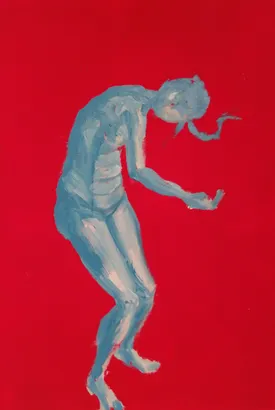
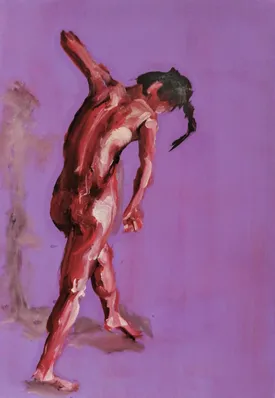
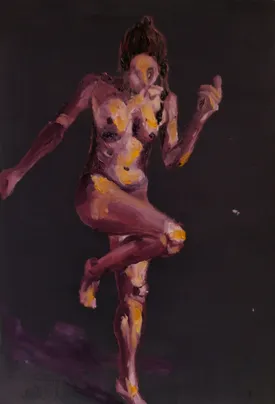
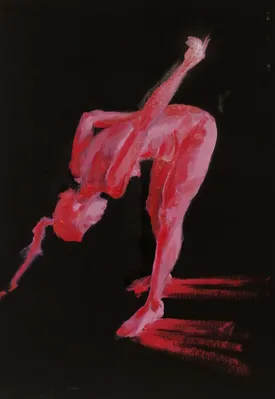
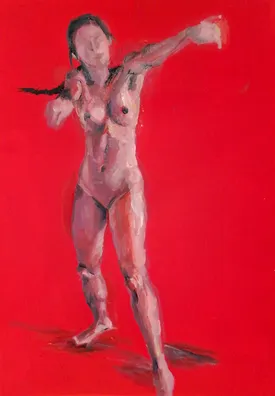
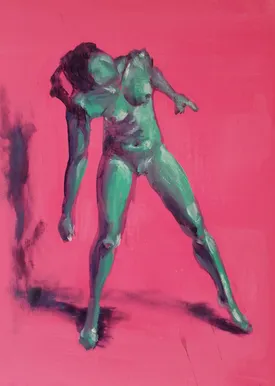
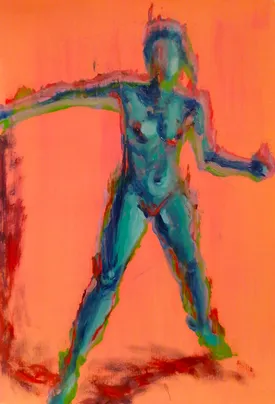
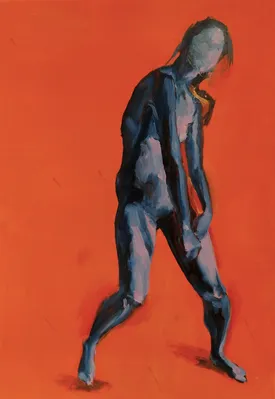
Collage I of 9 'Dance' — 80 x 57 cm, Oil and Acrylic on paper, 2024
In front of a camera triggered by remote, she captures moments of moving freely, mostly to melancholic songs with a few upbeat ones mixed in, gathering more than 400 photographs. The method places her outside anyone else's looking and kept her fully inside the moment, so that what matters is not her appearance but what she feels. With makeup, costume, and outward performance set aside, she wants an honest presence to surface, that of a woman, a Korean, an artist, making her way through the complexity of life in another country. It is, essentially, an act of shaking the body back and forth in order to hold tightly onto a soul.
Dance (Hani-mation)
Choosing nudity here is not simply about symbolizing freedom in a Western context. It is an act of exposure that allows emotion to be revealed completely, and is a direct meeting with the awkwardness and fragility that being unclothed brings. This is especially true for an artist raised in Korea, where nudity is not widely regarded as a common means of self-expression, and so the choice carries an even more distinctive meaning.
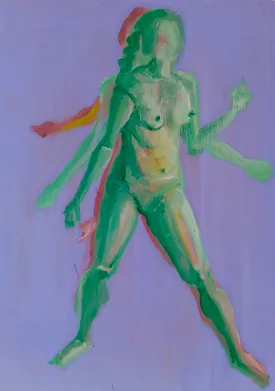
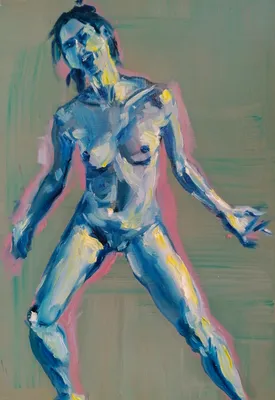
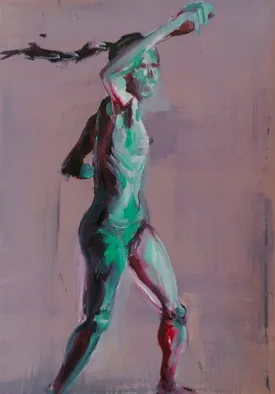
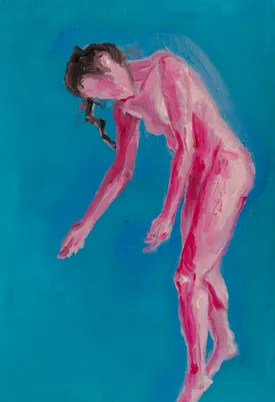
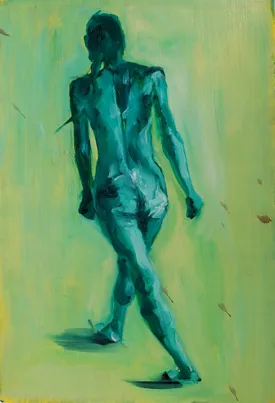
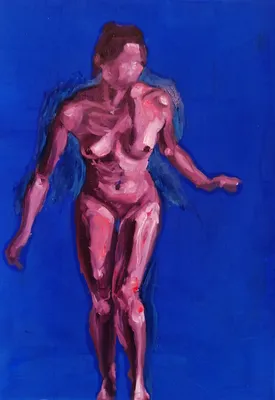
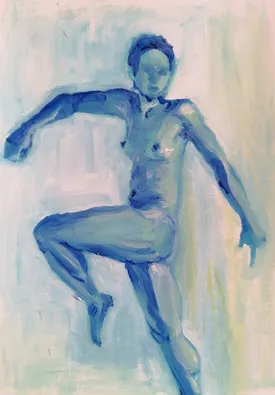
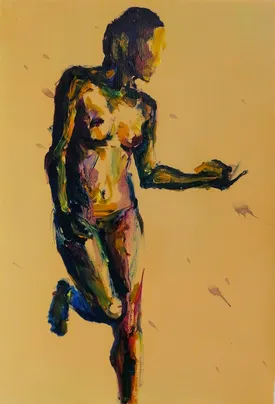
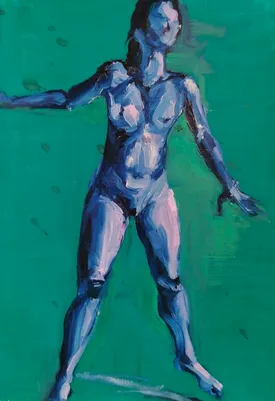
Collage II of 9 'Dance' — 80 x 57 cm, Oil and Acrylic on paper, 2024
The work holds Berlin's freedom and creative charge together with the grey landscape beneath it, the loneliness, the moments of alienation. Here, dance is at once how she shows herself and a language through which she expresses the emotional terrain of the city. Berlin is a place where freedom, solitude, fragility, and a sense of helplessness all arrive together. To live in another country is to translate yourself without end. As the woman she used to be grows faint with time, 'Dance (Hani-mation)' reaches for her, a hand extended quietly to remember her and to find her again.
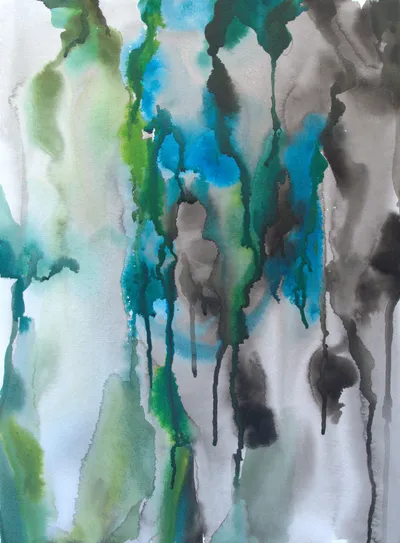
Chopin
This series began with the artist's passion for Frédéric Chopin’s music, expressing his melodies through visual art. Giving in entirely as the music overwhelms her with emotion, the artist keeps each movement completely instinctive. Without looking at the surface, the brush flows naturally across wet paper with acrylic ink.
Sometimes the focus narrows to a single passage, capturing its pure spirit in a single moment. Other times, a whole musical piece becomes the entire art piece. A single Chopin nocturne repeats in the background during the work, allowing fresh brushstrokes to respond to and overlap with what came before. Every new listen sparks a different feeling, leaving behind a physical buildup of emotion on the paper.
This body of work shows exactly how the artist’s bond with classical music becomes a practical way of making art. This straight line from sound to art creation is growing into the 'AfterThoughts' project, where visual art and music meet to express philosophical ideas.
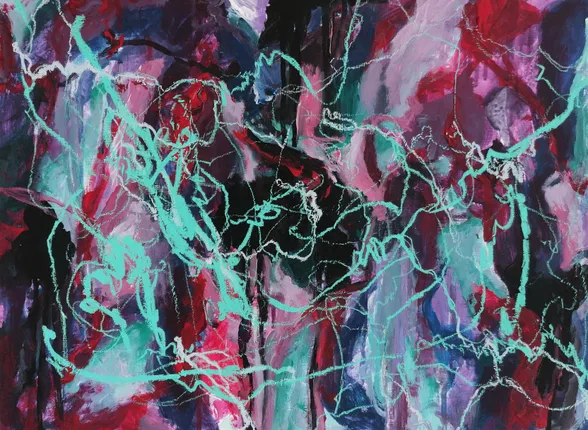
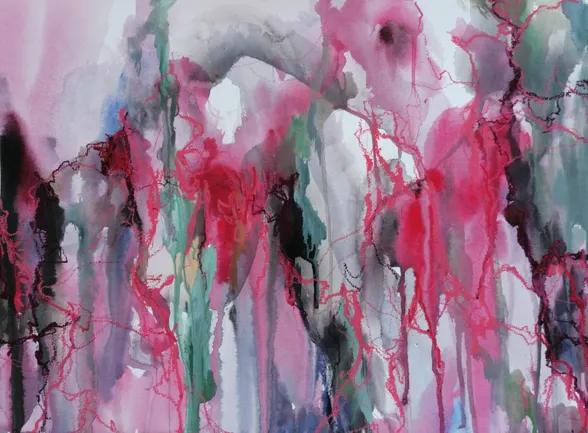
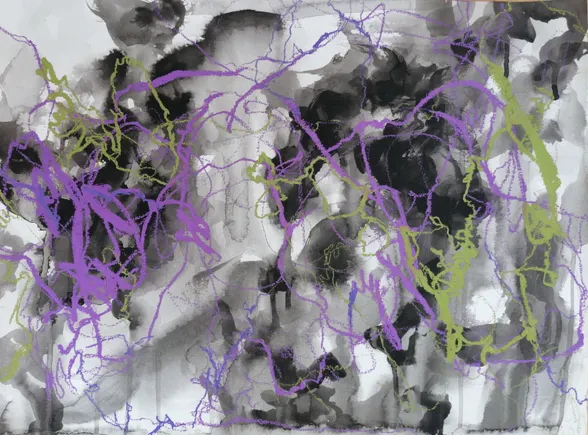
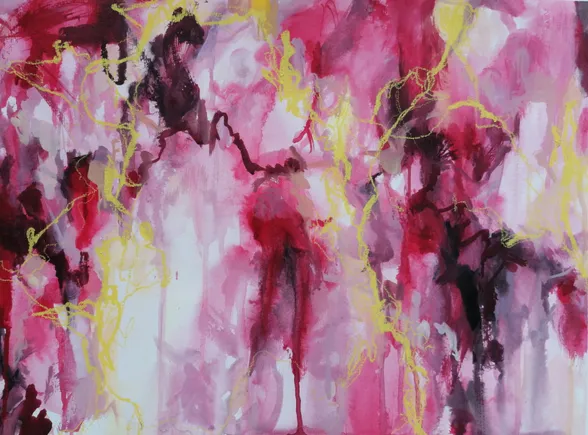
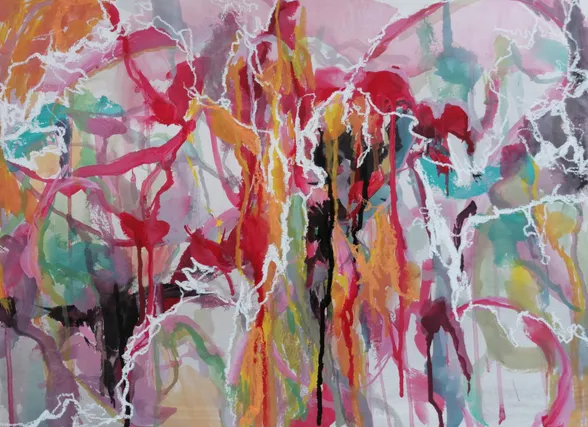
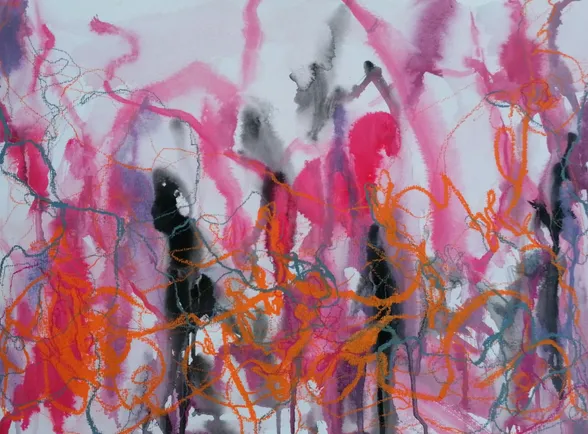
Untitled — 36 x 48 cm each, Oil pastel, Acrylic ink on paper 310 g/m², 2025
Chopin
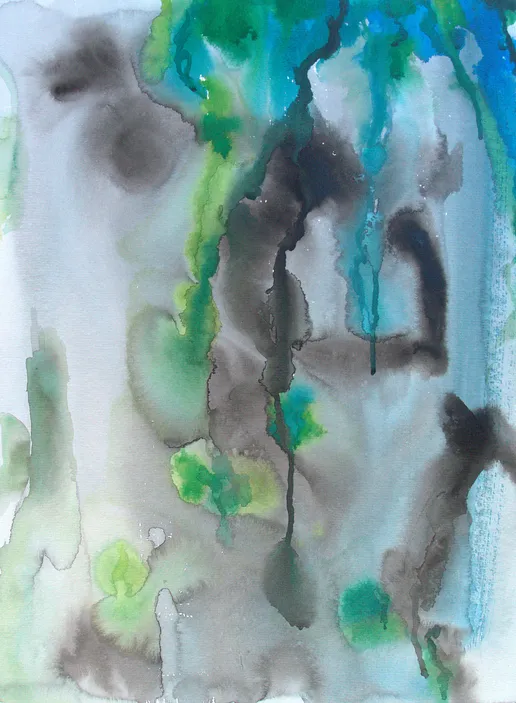
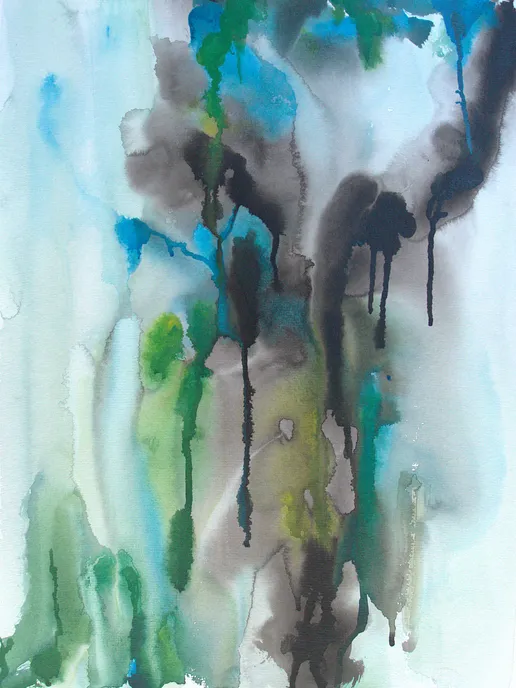
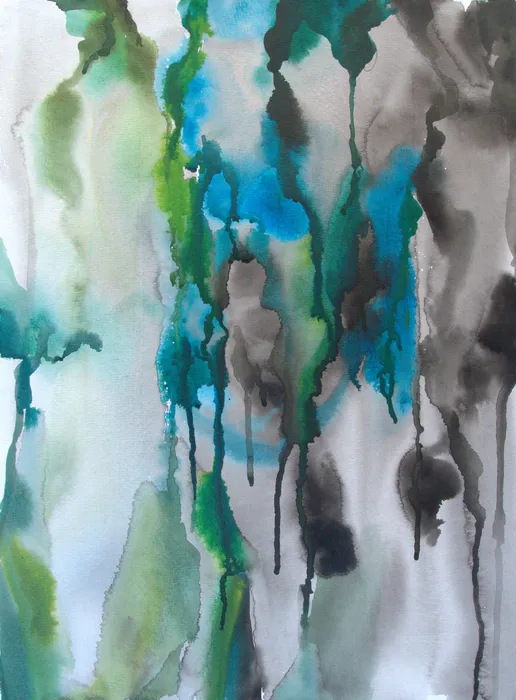
Untitled — 36 x 48 cm each, Acrylic ink on paper 310 g/m², 2025
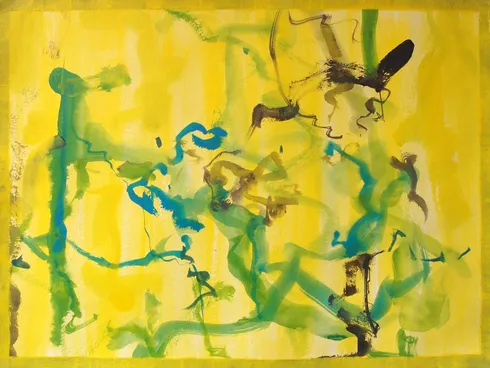
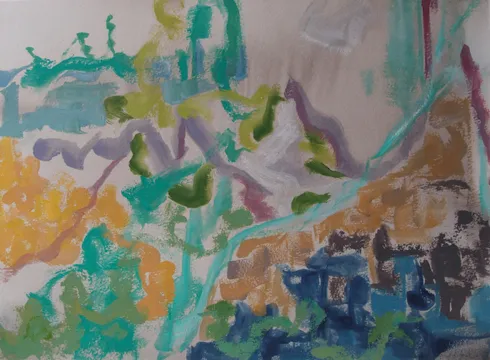
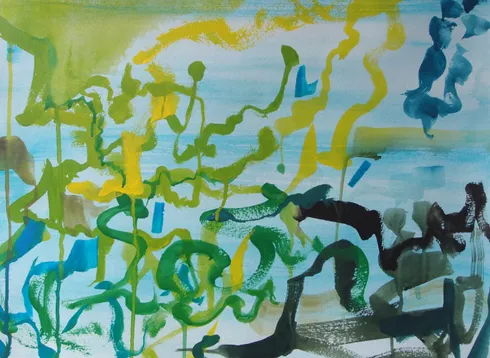
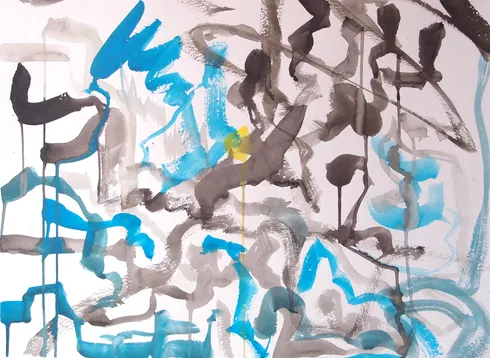
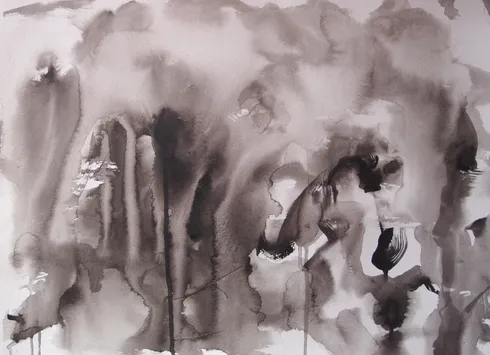
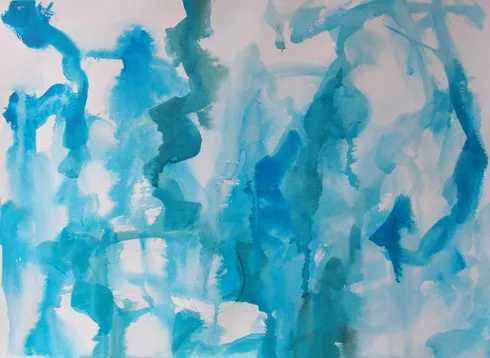
Untitled — 36 x 48 cm each, Acrylic ink on paper 310g/m², 2024
Connection
Gazing down at the city lights from a plane window, the artist caught herself thinking that the world is woven entirely from a vast web of relationships. Some connections grow from a heartfelt bond, while others originate from the weight of obligation. Within that space, the boundary between what is freely chosen and what is maintained out of necessity frequently blurs. Human connections are brilliantly beautiful, yet at times they can heavily burden the mind.
Allowing instinct to guide her hands, she moves the brush across wet paper, moving between spontaneity and control. Each time the ink seeps into the surface, the bleeds and dots generate unpredictability, and from that specific moment she finds the intentional forms that can only bloom there. Lines that extend thick and thin, sometimes trembling and sharp, become the delicate and hazy boundaries within our ties, showing the intricate complexity of human relationships. Much like the facets of life shaped by the intersection of intention and chance, she wants to capture on canvas the dual nature of these connections, the coexistence of their beauty and their weight.
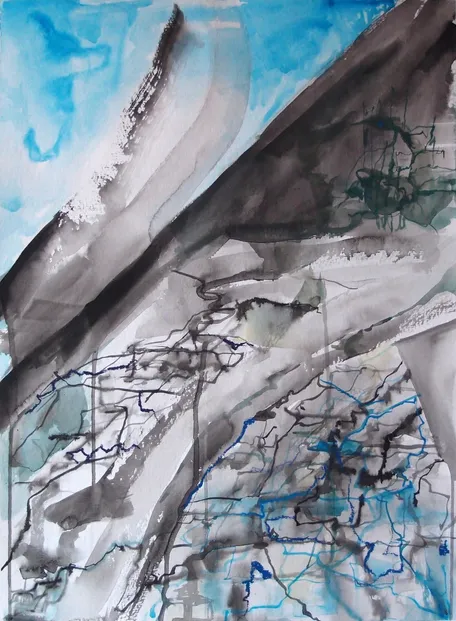
48 x 36 cm
Acrylic ink, oil pastel on paper 310g/m²
2024
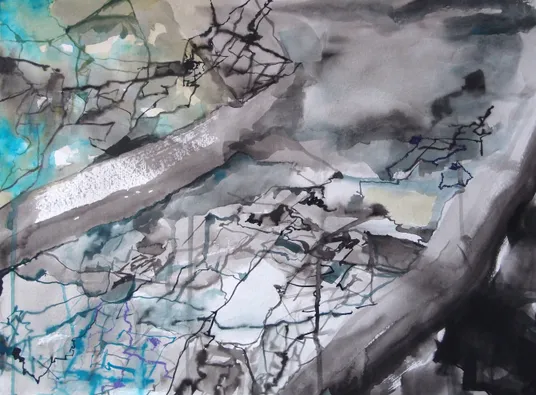
36 x 48 cm
Acrylic ink, oil pastel on paper 310g/m²
2024
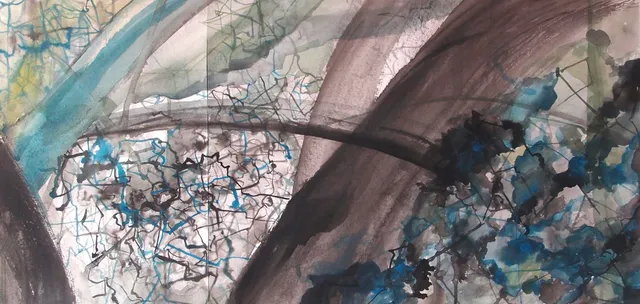
33 x 68.5 cm
Acrylic ink on paper 310g/m²
2024
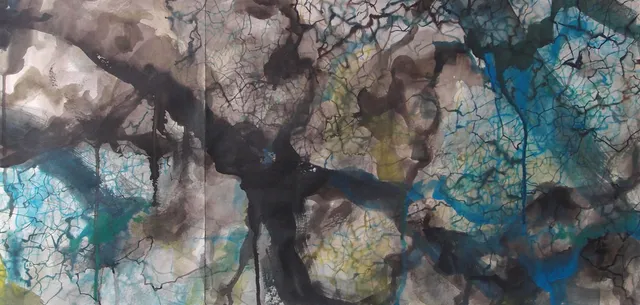
33 x 68.5 cm
Acrylic ink on paper 310g/m²
2024
Ongoing Project: AfterThoughts
Questions like 'What is life, and how should one live it?', 'What kind of being am I, with what thoughts and struggles?', and 'How should I view the world around me?' came to feel closer than ever to the artist. She feels a longing for depth of thought, and an uncertainty in her attitude toward everyday life. Saying that she never used to belong to the kind of person who reads books helps explain her current behaviour.
After Liberty
John Stuart Mill's 『On Liberty』, which she began reading last December, was deepening the questions that had been vaguely surfacing in her mind. First published in 1859, its discussions of individuality and freedom, the diversity of circumstance and individual development, and the warning against the tyranny of the majority provoked a fierce inner reaction in her.
Though these might feel like obvious truths from today's perspective, it felt like clenched fists pounding again and again at the society she had lived in, the environment she had lived in, and the thoughts she had lived by. A curiosity for philosophical questions and reflection arose in her. She read, one after another, Boethius's The Consolation of Philosophy, Marcus Aurelius's Meditations, and the Zhuangzi, and the list of books she wanted to read next kept growing by the day.
The emotional stirrings brought on by passages from these books passionately pushed her toward abstract visualization and musical composition. 『On Liberty』 is the very first meeting point of art and philosophy for her. This process of boldly looking into a philosophical message, reflecting on it, and talking it through will become not only a subject for art but an important material that colours her life anew.
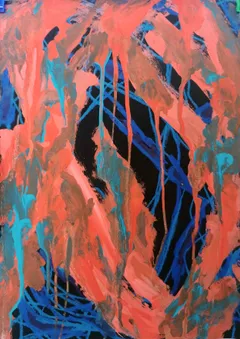
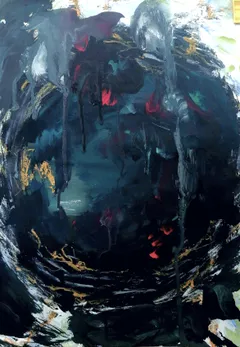
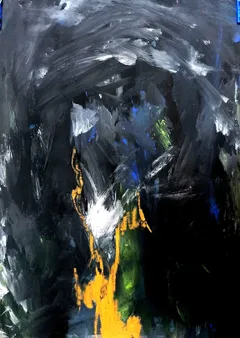
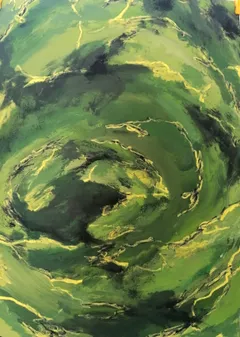
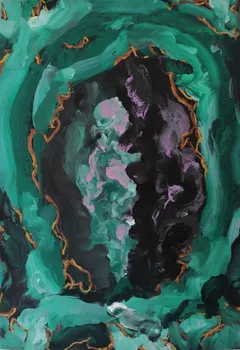
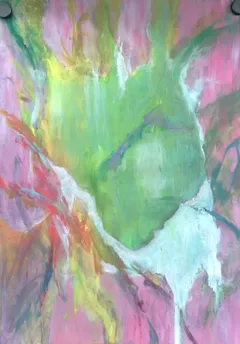
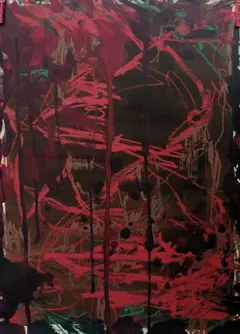
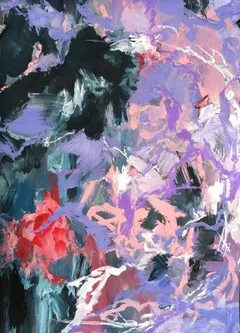
After Liberty
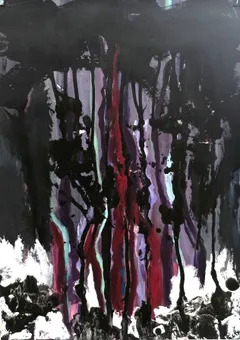
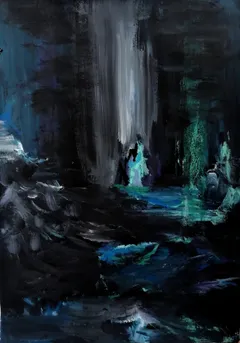
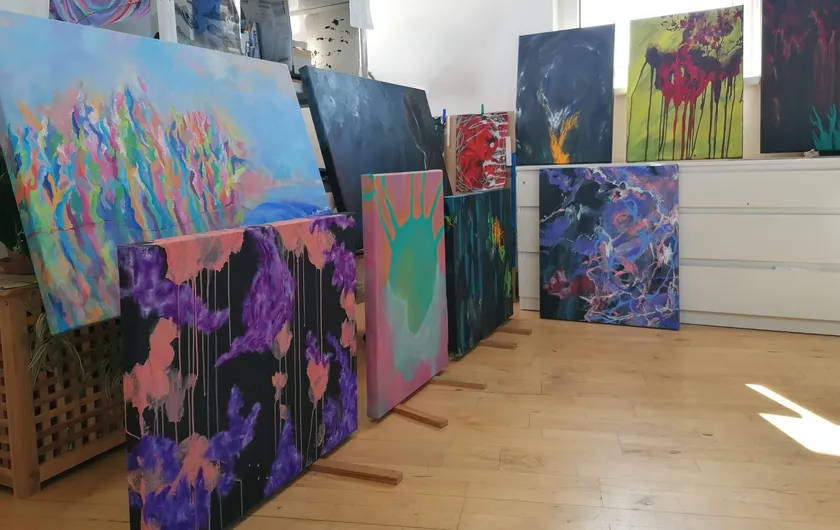
Artist Statement
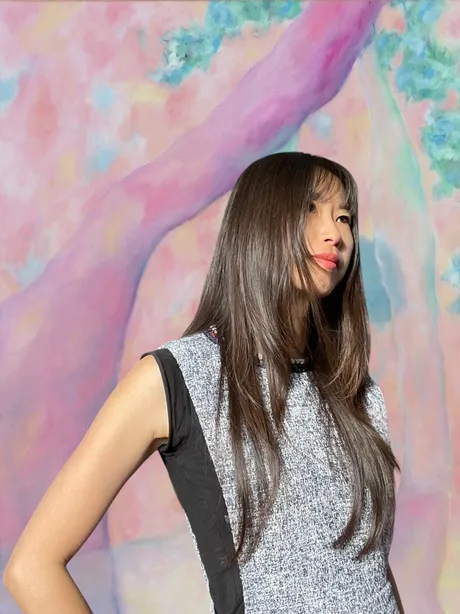
Hani Kim is an artist based in Berlin. Over the past 13 years, her life has moved through Seoul, Bern, Milan, and London before arriving in Berlin. That journey has broadened her perspective, but it has also left her with a cultural dissonance from the friction between Eastern and Western ways of thinking. Her work explores emotional states rooted in identity, cultural in-betweenness, memory, and psychological change.
Her long-held sense of in-betweenness has begun to shift into philosophical questioning. She wants to find meaning, and reaching for fundamental questions feels like the obvious path for her. Reading John Stuart Mill's 『On Liberty』 (1859) was a big part of this. His ideas on individuality and freedom got her reflecting on the environments, societies, and mindsets she had lived through. This stirred up questions she had carried for a long time but never faced seriously: What does it mean to live? What thoughts and concerns shape me as a being that exists? How should I view the world around me? These questions led her to further reading, and its philosophical messages, much like psychological shifts or memory, are becoming a solid addition to her themes.
Her ongoing project 'AfterThoughts' turns these philosophical ideas into visual, sound and multimedia form, beginning with its first series, 'After Liberty'. Mill's thoughts about individual freedom and its suppression by society are starting to take shape as paintings and piano compositions built from emotional melodies and dissonant chords. She wants to keep bringing philosophical matters and artistic expression together, through painting, music, installation, and other media such as technology and movement.
Her practice mixes instinct and control. She paints with spontaneous, raw gestures that capture fleeting emotions and unconscious impressions, then she steps back to shape the overall composition and mood. It is a process where spontaneity and control, unconscious and deliberate action, keep feeding into each other. This mirrors her own instinctive desire for control, even while she longs for a more spontaneous approach to life.
CV
Hani Kim / 김하늬 (South Korea) — based in Berlin
Education
- 2026 Workshops: Ceramic Art, Microbial Cellulose in Art and Design, Silkscreen printing, Wood Cut Printing, SketchUp, Performance Art, bbk Berlin
- 2023 - 2024 Private lessons under Isabella Gabriel Niang and Paola Ferri, Berlin
- 2022 - 2023 Drawing & painting studies under Andrei Krioukov, Kunstschule Berlin
- 2009 - 2014 BA Journalism, Broadcasting and Advertising, University of Sejong, Seoul
Exhibition / Open Studio / Workshop
- 2026 Intuitive painting art workshop, PICSAI symposium, Alanya
- 2026 Zemin Berlin, "friction", Group exhibition, Berlin
- 2025 - 2026 Kunstverein Neukölln, "Horizonte", Group exhibition, Berlin
- 2025 48 Stunden Neukölln Art Festival, "EchoesəvYourFace", Duo exhibition, Berlin
- 2025 Galerie erstererster, "Wer ist der Spion?", Group exhibition, Berlin
- 2025 GlogauAIR, Virtual Open Studio, Berlin
Residency
- 2025 On-line Residency Program, GlogauAIR, Berlin
Bibliography
- keephustling, Interview "Pursuing Her Dream as an Artist in Berlin", October 2025, Seoul
- GlogauAIR, Catalogue of Artists in Residence, Q1 2025 issue, March 2025, p.30-31, Berlin
- GlogauAIR, Interview "Meet the On-line Artist", March 2025, Berlin